

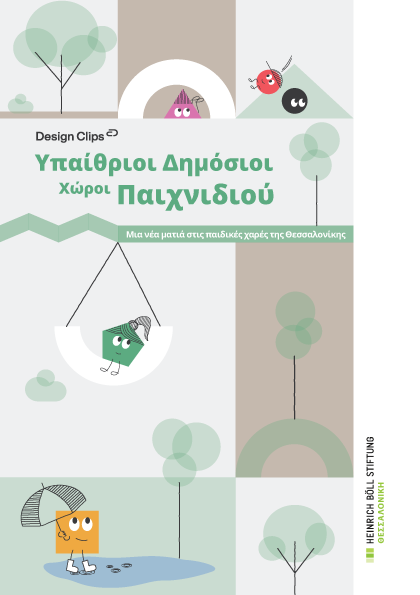
Developed in collaboration with Heinrich Böll Stiftung, this publication explores how the design of outdoor public play spaces can respond to the growing challenges of climate change, with a specific focus on playgrounds in Thessaloniki. Based on the review of 66 playgrounds across the city, the study examines how design choices, materiality, and maintenance practices shape children’s everyday experiences, while highlighting the urgent need to adapt these environments to increasingly extreme urban heat conditions.
The findings reveal recurring spatial and environmental limitations. Many playgrounds provide insufficient shading and rely heavily on synthetic ground surfaces that tend to overheat, retain water, and deteriorate rapidly over time. At the same time, play equipment often restricts opportunities for creativity, exploration, and open-ended play. However, the research also identifies promising examples, both within Thessaloniki and across other Mediterranean cities, where alternative design approaches incorporating natural materials, vegetation, and shading strategies create more comfortable, engaging, and climate-responsive play environments.
A central dimension of the publication is the role of participatory design in shaping successful public spaces. By actively involving children, caregivers, and local communities in the planning and decision-making process, municipalities can ensure that playgrounds better reflect the real needs and everyday practices. This approach fosters a stronger sense of ownership, contributes to reducing vandalism, and strengthens social cohesion at the neighborhood level.